Showing posts with label Shooting Star. Show all posts

Monday, October 12, 2020

Return to NaNoWriMo

 I'll be returning to NaNoWriMo on Nov. 1, the official start of the international writing event. It also will mark the official beginning of my 11th novel.

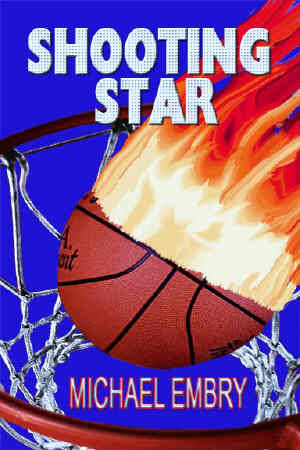
I've participated in National Novel Writing Month twice, both times resulting in young adult novels—Shooting Star and The Bully List. This time it will be for the fifth book in my John Ross Boomer Lit series.  I'm excited about getting started on the new novel. And as a former news reporter and sportswriter, I like working on deadlines.
There are several reasons I like NaNoWriMo:

  • It keeps me focused for 30 days in reaching the goal of 50,000 words. That's a doable 1,600 words a day.
  • I get energized leading up to the first day, my creative engines revving up for the event.
  • As already noted, I feel I'm at my best when working on a deadline. 
  • I'm basically a pantser so it fits my style of writing of letting the creative juices flow and going back later to clean up the scattered messes. 
  • It's fun being part of a collective effort involving writers around the world. I like to be supportive of other writers, especially those who are developing their writing chops. 

While I'm a panster (letting the characters run wild wherever my subconscious plot and subplots take them), I will have a few notes jotted down to get me going in the right direction on the first day. And whatever I write will probably change, hopefully for the better, during rewrites.

One more thing. I've become somewhat of a procrastinator in my twilight years. You can't procrastinate in NaNoWriMo. You have to write each and every day. The organization also provides tips to prepare for the writing blitz.

For those who like challenges, I encourage you to sign up for NaNoWriMo. For more information, check out this FAQ.

Good luck!

Until the next time . . .


Saturday, March 5, 2016

March Madness Giveaway

It's March Madness. Basketball fans know what that means. Hoops, hoops and more hoops.

So check out my latest giveaway: an e-book edition of "Shooting Star."

It's the story of a young man who transfers to a new school. Although he's an outstanding basketball player, Jesse Christopher faces obstacles in fitting in at the school as he contends with bullies, cliques, teachers, and even fellow basketball players.  

Jesse is the member of a rural team that has hopes of winning the Kentucky State High School Basketball title. Read his story. 

The giveaway ends March 12 so be sure and enter. No gimmicks. No follows. No strings attached. 

Give it a shot! You may be a winner.

Just click here.


Saturday, May 31, 2014

Keeping It Clean in Young Adult Novels

Sometimes I'm a bit perplexed when critics or reviewers knock a young adult novel because the language is considered too clean. In other words, simply not realistic.

I'm certainly not naive to believe that some young adults don't have potty mouth. It's almost like an act of rebelliousness. After they mature, many of them clean up their acts. 

But I know plenty of kids who don't cuss or use language that many would consider insulting or abusive toward others. Maybe they are mature for their age.

Or maybe they have been raised in a home where the parents and other family members set an example by refraining to use questionable words. 

As an aside, Vice President Joe Biden regretted saying, "This is a BFD" at the signing of the Affordable Care Act, adding that his mother would have totally disapproved! Hey Joe, my mom would have reacted the same way.

And that can be the same in the fictional world. Not all kids cuss and talk dirty. Many, if not most, are well-mannered and considerate. 

I wouldn't expect to find questionable language in a Christian novel (or any other religious-based novel) unless it was totally relevant to the story.

And I believe some authors -- perhaps acting as de facto family members -- try to set an example for their young readers by showing that you can keep it clean when talking to others, expressing anger or happiness, or any other verbal emotion.

I've been reading reviews of some books where folks thought the language was too adult. I don't have a problem with language if it pertinent, rather than gratuitous, to the story.  

I also think that kids may hear enough foul language in their lives from music, movies and from their peers that reading a clean novel might be somewhat of an escape for them as well.

Before I wrote "Shooting Star," I told several friends that I planned to write a novel that would be clean and inspirational to young people, much like the books I read when growing up by authors I admired such as Clair Bee and John R. Tunis. I thought their novels influenced me a great deal in terms sportsmanship and how to treat others, and I considered my novel as sort of a tribute to them.


And I took the same approach with "The Bully List," even though it would have been easy throwing in a few expletives here and there because of the subject matter.

I'm not being critical of authors who have used "realistic" dialogue in their novels. Whatever works for them is what they should write.

Your thoughts?

Until the next time...


Sunday, April 21, 2013

Writing From The Past


I just finished reading Ray Bradbury's "Zen in the Art of Writing: Releasing the Creative Genius Within You," a collection of insightful essays that will surely inspire most writers to, well, write.

One of the lessons I relearned -- no apology because I'm always learning or relearning things -- is to tap into your past  to energize (or re-energize) oneself for story ideas.

For me,  looking at old photographs back to the days of my childhood is something I enjoy. Those images bring back a flood of memories from times with my parents, siblings, relatives, friends, special events, and everyday occasions.

Another way is to visit friends  from your distant past and start reminiscing about those times that have slowly begun fade. No doubt they'll say things that will rekindle your memory.

Revisiting old haunts, neighborhoods, schools, and special places can open the mind's eye to things almost forgotten. 

They key, of course, is to write those things down before they begin to fade away into the deep, dark recesses of the brain.

Writers of fiction such as such as Mark Twain, John Grisham, Charles Dickens, Ernest Hemingway and Bradbury (among countless authors) reached into their past to craft their wonderful stories. I did the same when I wrote my young-adult novel, "Shooting Star." 

It's also a valuable resource for creative nonfiction writers. One of my author friends, Georgia Green Stamper, brought back vivid memories in her "Butter in the Morning," a collection of remembrances that I'm sure her family will treasure for many years to come. It brought back some memories for me as well.

Until the next time...

Monday, September 17, 2012

Making Contact

While promotion and marketing a book on the Internet is essential, I believe a mix with traditional media is important for success in sales.

You might not hit a home run but you could get extra bases when you connect in the right places.

I’ve used social media to get the word out about my books. I’ve sent emails (no spamming), blogged, and become involved in an assortment of networks such as
Linkedin, Goodreads, Shelfari and Manic Readers. You can find my works in places like Amazon.com, B&N.com, Smashwords.com, CreateSpace.com, and Wings-Press.com.

I recently participated in a giveaway for my latest book, “Laments,“ at Goodreads. It attracted 412 entries for the three copies. You might go there and sign up for drawings conducted by other authors. Be sure and “friend” me while you’re there.

With all of my novels I have mailed postcards to notify libraries, bookstores, friends, and family. One reason is that folks don’t always see what you’ve posted on the Internet. There may have been times when an email went to a junk-mail filter (ouch, that hurts!) and was inadvertently deleted (of course!). Believe it or not, some folks don’t use a computer. And, if they do, there's a chance they may not go to the same websites where you shout to the world about your book. Timing is important.

For "Shooting Star", which was published in 2011, I advertised in the Kentucky Book Fair catalog because it went to great audiences -- readers and libraries.

I also purchase book marks that I hand out at signings, book fairs, and other functions. They include my website and other places where they can purchase the book. When people purchase books directly from me, I always include a book mark.

I believe it’s best to cover as many bases as possible, especially if you want to be a consistent hitter as an author.

Until the next time…