Showing posts with label fiction. Show all posts

Thursday, December 22, 2022

The Books I Read in 2022

I'm a member of Goodreads and always participate in its Reading Challenge every year. This year's personal challenge was to read 30 books; so far I've exceeded that at 32 and still have a couple more on my bookshelf.

As a writer, I'm a voracious reader. I believe reading makes me a better writer. I think all writers feel that sentiment about their writing. While I love books, I also read newspapers, magazines, blogs, and various Internet sites. Even cereal boxes. 

Here are the books that claimed some of my precious time this year.

I spent an inordinate amount of time reading about our disgraced former president. It wasn't so much that I wanted to read about him, but to gain a deeper understanding of the workings of the government and why people are motivated to do certain things for the sake of power. It was a disheartening look at U.S. democracy in the 21st century. 

     Among the books:
     "Peril" by Bob Woodward and Bob Costa (up close and personal)
     "Trumpocalypse" and "Trumpocracy" by David Frum (a conservative's viewpoint)
    "The Plot to Destroy Democracy" by Malcolm Nance (a cyber expert)
    "The Big Lie" by Jonathan Lemire (details longtime game plan)
    "How Civil Wars Start" by Barbara F. Walter (scary outlook about the nation's future) 
    "Betrayal" by Jonathan Karl (my favorite of the books)
    
I've been a fan of mysteries for a long time. I try to read those that have a distinctive voice, believable characters, and gritty dialogue.
    "Sins of the Father" by Judith White (a pleasant discovery for me)
    "Looking at Kansas" and "Last Train to Miami" by Chris Helvey (one of my favorite murder-mystery writers)
    "Harmon Creek" by Thomas Fenske (based on a heinous crime in Texas)


The next few books probably fall under the General Fiction category. Each has elements of suspense, mystery, sadness, and humor.
    "Uncle Ahmad's Toys" by E. William Fruge (focusing on immigration and racism)
    "Where the Crawdads Sing" by Delia Owens (who hasn't read this book?)    
    "The Necessities of Life" by Ed Ford (Eastern Kentucky mining town during the Great Depression)
    "Zorrie" by Laird Hunt (Woman seeks purpose and understanding in life)

And some nonfiction and poetry:
    "Small Acreages" by Georgia Green Stamper (reflections on a interesting life) 
    "Promise" by Patricia Rose (dealing with a broken heart)
    "Gangsters vs. Nazis" by Michael Benson (something new about "good" bad guys against evil bad guys)
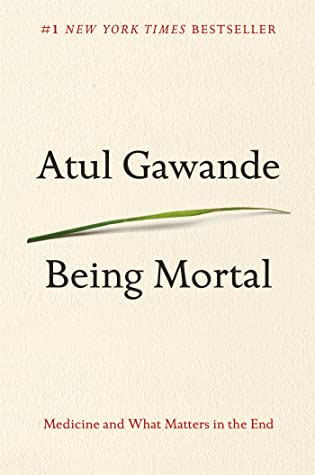
    "Being Mortal" by Atul Gawande (end-of-life options to consider)

Other books I read and enjoyed.
    Nonfiction: "Enemy of the People" (Terrence Petty), "Factfulness" (Hans Rosling), "USA National Parks" (DK Eyewitness Travel), and "Balance Exercise for Seniors" (Baz Thompson).
    Fiction: "She's Missing" (Mike Paull), "The Island" (H. Wakefield), "If She Knew" (Blake Pierce), "Antique Mourning" (Eileen Harris), "Alaska Shelter" (Debbie LaFleiche), "Death Canel" (Michael Hartnett), "After the Ark" (Dick Shead), "Journey to Mackinac Island" (Kileen Prather), and "Adultery 101" (Margaret Kona). 

I've reviewed the books on Goodreads if you're interested in reading them. As an author, I ask readers to leave ratings and/or reviews of my books. So as a reader, I do the same. 

I'll be signing up for the 2023 challenge soon. This time, I'll probably increase the number to 36 books. I hope you join in the challenge as well. It's rewarding, entertaining, and fulfilling. And while you're at it, connect with me.

Until the next time . . .


Thursday, May 6, 2021

Manuscript Report: Back to the Editor and Recent Read

My latest manuscript is back in the hands of my able and trusting editor. She'll make the edits, send it on to a proofreader, and format the work into a galley proof. 

I probably added another 800 words to the manuscript, bringing the total to about 60k. There were some transitions needed between scenes, dialogue fixes, and additional descriptive passages in the "show, don't tell" category.

The galley will return to me for a final read and minor edits for any typos as well as grammatical errors, and misspellings that may have slipped through on the first edits. If you're wondering if I'm getting tired of reading and editing the manuscript, well you're right. But it's a process that has to be done to make things right for the writer and reader.

While I'm busy with the words, the graphic artist at Wings ePress will try to capture the essence of the words into a book cover that will pique the interest of readers. 

If all goes well, the manuscript and cover will magically (at least in my mind) transform into a book, the fifth in the John Ross Boomer Lit series, on Oct. 1. 

And here is a recent read:

William H. Coles's book is for those who are interested in writing fiction, providing examples of how to approach different areas such as scenes, characters, structure, dialogue, and revision. He's the author of novels, short stories, and essays,  He also created www.storyinliteraryfiction.com, a useful website with resources for writers, illustrators, and readers of literary fiction. Check it out!


For those on Goodreads, feel free to follow and/or friend me by clicking here.

Until the next time . . .


Friday, May 25, 2018

Writing Advice: My Take on Finishing a Novel

I recently heard from a friend working on a debut novel, asking for my advice on how to get past the middle part and get to the end.

His problem was that he'd written the first part, three chapters, and knew how it was going to end, but was stuck in the middle, staring a those proverbial blank pages. He wanted to know what to do.

My advice was to go ahead and write the final chapter(s), then go backward and fill in the missing parts that lead to the ending. 

I thought the most important thing for him to do was to write, not to get hung up on the overall story. I know quite a few authors who knocked out about 50 pages, then hit the wall and gave up. It happened to me a couple times before I finally worked through it with my first novel, The Touch, in 1998. 

It's also important for the writer to understand that the words their putting down is simply the first draft. They'll be amazed how the novel grows and develops over subsequent rewrites and revisions before they reach "The End."

Above all, I believe the key to success is to write every day, be it 15 minutes or 15 hours. For me, I write through the difficult days, often discovering later that those passages gave me deeper insights into my story.

How would you tackle my friend's dilemma? 

If you have any questions about writing that you'd like me to address, leave it in the "comment" box below or send it privately to my email (I won't disclose your name).

Until the next time . . .  


Sunday, November 30, 2014

NaNoWriMo -- Finished (Almost)

I topped the 50,000-word goal on the last day of  National Novel Writing Month.


I wrote  50,241 words over the 30-day marathon. It feels good to reach that level. My average was 1,674 words a day.

While I was able to produce more than 50k words, I'm still working on a first draft. This manuscript is probably two-thirds of the way finished, but it's a good start.

There's still a lot of work to be done to fill in holes, develop characters, and stay focused on the overall story.

Then comes the hard part of writing -- the rewrite. It's almost like starting over, except that I'm not working with blank pages. It's the long process to polish sentences, further develop characters, show rather than tell, improve dialogue, and much more.

I'll be posting more about that process after I finish the first draft.

As for the work-in-progress, in case you're wondering, it will fall under the boomer-lit category. More about that later.

But, for the moment, I'm glad that I've reached the NaNoWriMo summit even though I have higher mountains to climb. 

Until the next time...


Sunday, May 19, 2013

Two Rewrites Down and More to Go

I've completed two rewrites on my manuscript. I wish it was ready for publication. Sadly, for me, it needs more work before becoming a book for young adults. 

I was able to tie some loose ends together but I found a few more holes along the way. I may also delete a scene that I'm not sure needs to be in the story. It'll probably be cut or rewritten.

And I'm not pleased with the ending. That's going to involve some major revisions on the third rewrite. 

Along the way I take notes on changes that need to be made. It makes it a lot easier when going back over the manuscript. I also need to add more description to characters and scenes.

So, as you can see, there's a lot of work to be done. 

I'll probably print the manuscript after the third rewrite. I find it useful to see the words on paper. I'll also take out my red pencil to mark it up -- a reminder of my early days as a journalist working on the copy desk.

I want to keep the manuscript in the 50k range, and now it's inching toward 52k.

I'll keep you posted after the third rewrite.

Until the next time...

Monday, March 5, 2012

Writing and Reading

Sometimes being an author requires more than writing a book. You may be asked to read from your work at book signings, libraries, churches, learning centers, schools, book fairs, and other gatherings.

For readers, this is a special treat. They are able to put a voice to the words they see on the pages. And it's also a time to meet those writers you admire.

Last week I attended readings by several Wind Publications authors at the Carnegie Center for Literacy and Learning in Lexington, Ky. It marked the 20th celebration of the Nicholasville, Ky., publishing house, owned by poet Charlie Hughes.

Among those taking part were poets Harry Brown, Sherry Chandler, Dorothy Sutton, and Steve Rhodes; fiction writers Normandi Ellis and Georgia Green Stamper; and non-fiction writer Steve Flairty. Charlie also shared some of his poetry. (You can find some of their titles at the Wind Publications website.)

A reading provides a chance for an author to see how his or her words resonate with readers. It just might be music to their ears.

Until the next time...

Thursday, January 5, 2012

In the News

Some novelists will tell you that you simply have to read newspapers and magazines, watch TV news or listen to the radio to get story ideas.

Those are great ways to let your imagination take off in the "what if" direction -- what if this instead of that happened? Subconsciously, that's where a lot of stories come from, even from our own life events, as we embellish, insert some twists and turns, come up with some juicy sub-plots, etc. Those nuggets become a mother lode.

But looking at headlines -- without reading the story -- can be a great exercise in letting your imagination run wild. Give some thought about following headlines and then read the story and compare:


I do advise following up on news stories because of the remote chance you could imagine the real thing. You've heard it before: Life is sometimes stranger than fiction!

Until the next time...

Sunday, January 1, 2012

A Write Resolution

No doubt many folks have set resolutions for 2012 to make themselves healthier, wealthier, and perhaps, wiser.

Good luck on all three. I'll settle for being healthier. I'm not wealthy, at least in the category of the infamous 1 percent, but wouldn't mind a few extra coins in the piggy bank.

As for wiser, I'd like to think that with age comes a tad bit more wisdom (kind of a strong word, but I hope you know what I mean).

Since this is primarily a blog about writing -- and I do go off on  tangents from time to time (see above) -- I'll try to focus more on the writing life this year.

My primary goal this year is to do some creative writing on a daily basis. Last fall I started another novel but life got in the way and I abandoned the project. I may go back to it, and I may start something new. Only time will tell. But I do plan to write each and every day this year.

I've read and heard from folks who say they plan to write a 150,000-word novel this year. Really? Does a person really know that the novel they want to write is going to be so many words before they write that first word, sentence, paragraph, chapter?

I believe a more realistic goal is to write daily on the novel or nonfiction manuscript. You'll know when you're finished. It could be at 70,000 words. Maybe 85,000. Or it could reach 150,000. The key is to tell the story. The word count will be determined by that.

One more thing. Writing is discipline. It's not rocket science. To be a writer, you have to write. Daily.

Until the next time...