Tuesday, July 31, 2018

WIP Update: Second Rewrite

I've completed two rewrites of my work in progress.  There's still a ways to go before I submit it to my editor. 

As with any rewrite, there are additions and deletions from the manuscript. I added about 5,000 words even though  several chunks of the first draft were eliminated.

One thing I focused on was the timeline. Since most of the story covers a 10-day period in the lives of John and Sally Ross, I had to make sure that those eventful days would be clear to the reader (and my editor). I fell about three days short in the original so that's where many of the added words/scenes can be found.

It was also a time for character development, especially the new ones in this third installment of the series. I've introduced two major characters, eight minor, and one flat. Learn about character types by clicking here. 


I hope readers gain a deeper understand of John and Sally since they are dealing with different challenges and predicaments in this story. I don't want static characters, regardless of type. 

I haven't looked at the manuscript for two days, trying to give my tired eyes a rest and overburdened brain a break from the story's twists and turns. I'll delve back into it in the next day or so. 

Until the next time . . .  

Friday, July 20, 2018

WIP Update: First Rewrite

I took a different approach to the first rewrite of my work in progress. As mentioned in my previous post, I used the Hemingway App to edit the manuscript, the third book in the John Ross Boomer Lit series.

I did find it time consuming, having to copy and paste several times. But after awhile, I got used to it as it became second nature in the editing process. I'm sure it will be easier to use after I learn a few shortcuts. 

The software was useful in keeping me focused. The color-coded program highlighted possible problems, such as passive voice, adverbs, and complex sentences that might be difficult to comprehend. It also suggested simpler words for clarity.

I followed the advice, stripping out perceived problems to cleanup the manuscript. Along the way, I found myself deleting or rewriting sentences. I also noticed repeated words that needed to be trashed or replaced (most were deleted).

As mentioned, the app doesn't like long or complex ("wordy") sentences. Sometimes the suggestions for simpler sentences are simply too simple. That's simple enough but writers vary the length of sentences to gain rhythm and convey thoughts. Writing is not simple. I'm sure Ernest Hemingway would agree.  

I told my editor that I've made significant progress so now  on to the second rewrite.  

Until the next  . . . 


Friday, July 6, 2018

WIP Update: Back to Work

I've been sitting on my work in progress for about a month and it's beginning to gather a few flakes of virtual dust.  And I've probably gained a few flecks of gray in what hair is left on my head.

So now it's time to get back to work. I plan to get started on the sequel to "Darkness Beyond the Light"  bright and early on Monday morning. In the meantime, I'll download the Hemingway App to get an idea how it works so I won't get bogged down too much by a learning curve as I delve into the first rewrite. 


I've got a stack of notes I've written from research the past few weeks to help in filling in some holes in the manuscript. 

How long will it take to get the manuscript in shape to submit to my editor? As long as it takes but I hope no longer than a month. I generally perform about 10 rewrites before placing it in her able hands. And from experience, I know she'll have some questions and suggestions that will involve some rewrite and revision to strengthen and tighten the story. 

Stay tuned for progress reports. 

Until the next time  . . .

Monday, June 25, 2018

WIP Update: Rewrite and Editing Software

I've been sitting on my work in progress for more than two weeks and haven't lifted a finger on the keyboard to give it a second look. 

I know some folks who have waited months, perhaps even a year or so, before going back to a first draft. The longest period for me was five months.

I'll probably venture back into the manuscript very soon. While I haven't looked at it, there has been some mental activity about the novel, the third book in my John Ross Boomer Lit series. And I have done some research as well, taking down a few notes so I can hit the manuscript running when the time comes to begin serious rewrite.

I've also looked into to some editing tools to supplement what's already installed on my computer. I'm giving serious thought to the Hemingway App program. It appears simple and easy to use, things that I find very attractive at this point in my life. And it's affordable at $19.99, which makes it even more attractive to my frugal eyes. If I decide to splurge, I'll let you know how it works out.

I've read about other programs but they seem to do more than what I want for my manuscript. I keep handwritten notecards and notebooks (even a few scribbles on Post-it notes) about characters, places, and other items that I can easily access. 

Furthermore, I don't like going back and forth within a program. It might be an age thing (you know, light on tech savvy) but I don't want all the bells and whistles. I did try a program a few years back that was more trouble than what it was worth (and it was free).

You can call me old fashion, and you'd probably be close to the mark. I get more that way as the weeks, months, and years fly by. 

Here are a couple sites that rate programs: Click here for a list of top 10 creative writing software programs and click here to see a top six list. 

Any recommendations out there?  

Until the next time . . . 

Tuesday, June 12, 2018

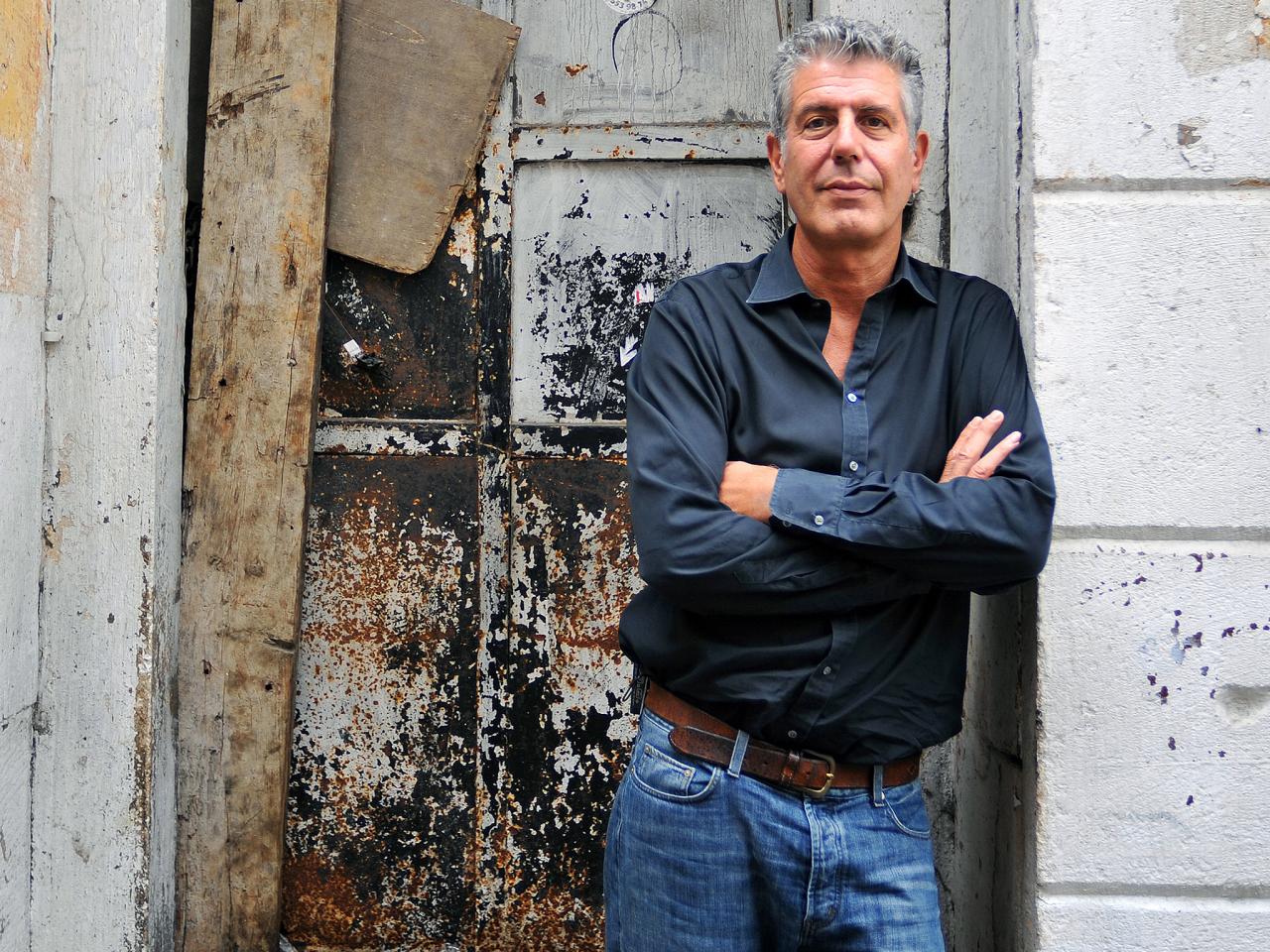
Remembering Anthony Bourdain


I wonder if Anthony Bourdain had any idea how much he was respected, admired, and loved before he took his life on June 8?

Anthony Bourdain
I didn't know Bourdain other than through his TV persona in his programs on The Travel Channel (No Reservations) and CNN (Parts Unknown). I hadn't read his bestselling books, although I can see how his writing skills carried over into his shows. They flowed from one scene to the next to a satisfying conclusion.

Bourdain definitely had a screen presence—a slender 6-foot-4, wavy gray hair, and tattooed torso. He exuded a self-confidence that he was willing to try most anything. A zest for making the most out of life. Perhaps because he had erased the demons of drugs and alcohol from his body.

I liked his honest and straightforward opinions. He was fresh and blunt. He didn't try curry favor. He was true to himself and his viewers. A mutual respect
. 

Bourdain
was an excellent interviewer, never getting in the way of interviewee and allowing them to express their thoughts because he was also a listener and learner. He didn't seek out the rich and famous as he was comfortable with everyday folks. He had a sense of humor but it wasn't meanspirited toward others.

Although he bordered on being bold and brash at times, displaying what Southerners might refer to as a New York attitude, there was an empathy inside that revealed how much he cared about others.

And Bourdain allowed viewers to experience vicariously the pleasures of travel to various destinations, taste exotic foods and drinks, observe other cultures, and, in the process, bring the world closer together because of his humanity.

Here are a few remembrances and tributes about the 61-year-old chef, raconteur, and writer:


Until the next time . . .

Sunday, June 10, 2018

Writer Suicides and More

This past week we have read about the suicides of celebrities Anthony Bourdain and Kate Spade.


Anthony Bourdain
Bourdain was a noted chef, best-selling author, and TV personality, known most recently for his award-winning program on CNN, "Parts Unknown. " It was always fun going along on the ride with him because he seemed willing to try most anything. He knew how to really travel and experience other cultures. He was 61. 

Kate Spade
I wasn't familiar with Spade, who gained fame and fortune from designing handbags and other fashion items. That's probably the reason her name didn't register with me (I don't buy purses). My wife knew of her and her high-end products. Spade used her considerable creative talents to build an impressive and influential company that inspired other entrepreneurs. She was 55. 


I was reading an interview with Bourdain in The Paris Review this morning and he mentioned the late Hunter S. Thompson as one of his literary heroes. I found it interesting when Bourdain noted: 

"I always sort of feel mixed emotions when I hear that people went and hung out with Hunter and how great it was to get high with Hunter. The fact is the guy was having difficulty doing any sustained writing at all for years probably because so many quote, unquote, “friends” wanted to get high with him …"

I wondered if Bourdain was suffering from similar difficulties of trying to live up to expectations of others as well as the curse of fame?

There have been other notable suicides among writers including Ernest Hemingway, Sylvia Plath, Virginia Woolf,  David Foster Wallace, Michael Dorris, Harry M. Caudill, and Richard Brautigan.  The list is quite extensive.

Others who attempted suicide include luminaries such as Raymond Chandler, Robert Penn Warren, and Kurt Vonnegut. 

 The Atlantic reported a Swedish study in 2012 that revealed authors are twice as likely to commit suicide as they are "overrepresented among people with schizophrenia, depression, bipolar disorder, anxiety syndrome, and substance abuse problems."

In the United States, the overall suicide rate of the general population increased about 24 percent from 1999-2014—from 10.5 to 13.0 per 100,000 people. There were 44,965 in 2016, an astounding average 0f 121 a day. Veterans have been susceptible to suicide, accounting for 18 percent of the adult deaths. And baby boomers, too.

Read about the eight signs for those at risk for suicide that include talking about suicide, feelings of guilt, drug use or excessive alcohol use, buying a firearm, and health issues. And here's another article about how to recognize a person at risk for suicide. 


The National Suicide Prevention Hotline is 1-800-273-TALK (8255).

Until the next time . . . 


Monday, June 4, 2018

Writing Advice: My Take on Finding Time to Write

You're not going to find anything new here about managing time so you can write. There are blogs and articles galore about how to eke out minutes or hours to work on your masterpiece.

But here's my two cents' worth on what I've learned from writing 12 books including eight novels:

  • When working on a first draft, I try to write in the predawn hours (I'm an early riser), when it's dark outside and relatively quiet. I have a timer on my coffee machine so the hot brew is ready when I go to my study and sit in front of the computer.
  • I don't go online. I don't need distractions. I'm here to write. I have a cell phone but I'm not glued to it (a generational thing?) but it's turned on in case of an emergency involving family and friends.
  • I generally have a good idea about what I'm going to write because I close the previous day's session with a hook to pick up where I where I stopped. And I give more thought about it, probably subconsciously as well, in the interim. That includes writing notes (I don't trust my memory anymore) to keep focused.
  • I usually write for a minimum of one hour but it can stretch to two or three if I'm really in a groove. There was a time, when I was a younger man, that I could write for several hours (four or more), only breaking for liquid refreshment or going to the bathroom. I find that I can accomplish a lot in one hour, leaving me somewhat mentally spent. So I like to believe that it's quality, more so than quantity time. 
  • I do use a general outline at the start of a project, but it doesn't bother me to stray from those early plans. That's part of the fun of writing: learning more about your characters and where they take you. And I have a good idea how the story will end, although it may take some twists and turns getting there. That's the fun part as well.
  • When I'm finished with the first draft, I sit on it for a week or so, maybe even a month or longer, before going back to it. I like to have fresh eyes when I read it again. On rewrites and revisions, I generally work in afternoons or evenings. I find that's the best time to reflect on what's been written. 
  • Working on a first draft or rewrites, I know that life sometimes gets in the way of best intentions. I prioritize. Family matters most. Other daily activities such as reading and exercise are important to me as well. I can be flexible to work around those events.
  • Lastly, I write every day when working on a book. If something interrupts me in the morning, then I write before going to bed. Writing begets writing.  

Do you have any secrets, rituals, and advice on finding the time to write?

Until the next time . . .