Showing posts with label writers. Show all posts

Sunday, November 24, 2019

Bluegrass Writers Coalition: From Pen to Page

I'm a founding member of the Bluegrass Writers Coalition, formed about 18 months ago in Frankfort, Ky., to discuss everything related to reading and writing. 

We get together the second Thursday of each month at the local Panera Bread Co. and share our thoughts about poetry, fiction, nonfiction, promotion, marketing, or whatever anyone cares to discuss in the one-hour meeting (we set the alarm to ring one hour after our 5:30 p.m. start). We also have brief readings and share our work as we build the writing community.

We have about 20 members but usually around 12 to 15 show up for meetings since many of them work full-time jobs. Our ages range from the 20s to the 70s. We have newbies and published authors. No dues. No commitments. Just show up when you can.

It's an eclectic group of interesting men and women from  various backgrounds and vocations who simply enjoy writing and reading. And on top of that, we seem to like each other so you might say we're a social group as well. 

This past summer we decided to publish an anthology, with members submitting novel excerpts, short stories, poems, essays, and creative nonfiction works. The result was the 154-page "From Pen to Page: a selection of writings from  the Bluegrass Writers Coalition," published in late October. It's available in print and ebook (and just in time for Christmas gift-giving). 

The book is dedicated to Mark Kinnaird, a founding member who passed away unexpectedly last summer at age 59.  Besides an insightful poet, Mark was a staffer at the Paul Sawyer Public Library in Frankfort, involved in book clubs and the annual Gathering of Authors" event as well as other responsibilities. He loved the written word.

Our group has other plans such as book signings and public readings. Other activities may develop in the coming months.

Feel free to join us at our next meeting on Dec. 12 (or any meeting on the second Thursday of the month). We also have a Facebook page if you want to learn more about BWC.

Until the next time . . .  


Sunday, June 10, 2018

Writer Suicides and More

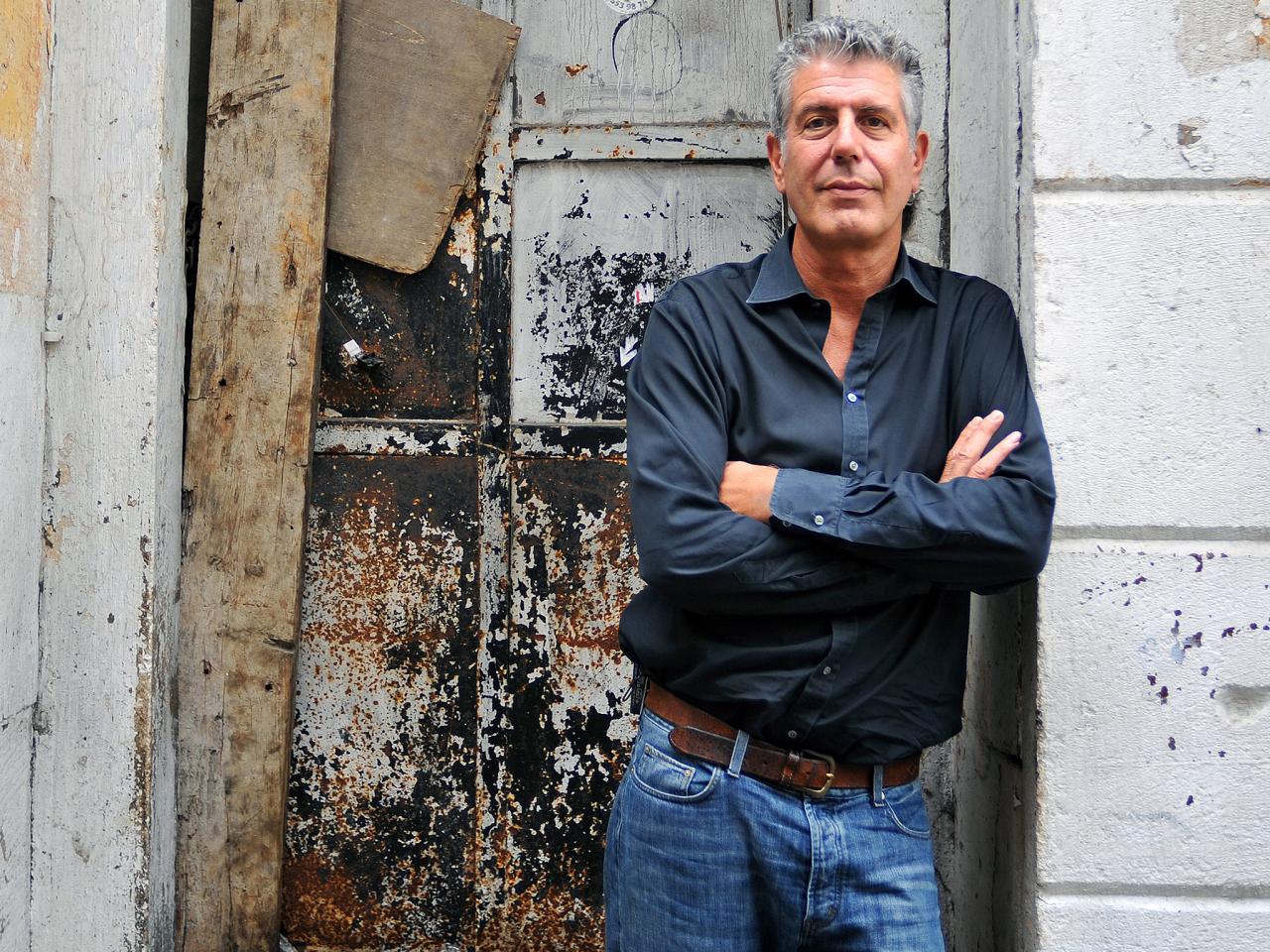
This past week we have read about the suicides of celebrities Anthony Bourdain and Kate Spade.


Anthony Bourdain
Bourdain was a noted chef, best-selling author, and TV personality, known most recently for his award-winning program on CNN, "Parts Unknown. " It was always fun going along on the ride with him because he seemed willing to try most anything. He knew how to really travel and experience other cultures. He was 61. 

Kate Spade
I wasn't familiar with Spade, who gained fame and fortune from designing handbags and other fashion items. That's probably the reason her name didn't register with me (I don't buy purses). My wife knew of her and her high-end products. Spade used her considerable creative talents to build an impressive and influential company that inspired other entrepreneurs. She was 55. 


I was reading an interview with Bourdain in The Paris Review this morning and he mentioned the late Hunter S. Thompson as one of his literary heroes. I found it interesting when Bourdain noted: 

"I always sort of feel mixed emotions when I hear that people went and hung out with Hunter and how great it was to get high with Hunter. The fact is the guy was having difficulty doing any sustained writing at all for years probably because so many quote, unquote, “friends” wanted to get high with him …"

I wondered if Bourdain was suffering from similar difficulties of trying to live up to expectations of others as well as the curse of fame?

There have been other notable suicides among writers including Ernest Hemingway, Sylvia Plath, Virginia Woolf,  David Foster Wallace, Michael Dorris, Harry M. Caudill, and Richard Brautigan.  The list is quite extensive.

Others who attempted suicide include luminaries such as Raymond Chandler, Robert Penn Warren, and Kurt Vonnegut. 

 The Atlantic reported a Swedish study in 2012 that revealed authors are twice as likely to commit suicide as they are "overrepresented among people with schizophrenia, depression, bipolar disorder, anxiety syndrome, and substance abuse problems."

In the United States, the overall suicide rate of the general population increased about 24 percent from 1999-2014—from 10.5 to 13.0 per 100,000 people. There were 44,965 in 2016, an astounding average 0f 121 a day. Veterans have been susceptible to suicide, accounting for 18 percent of the adult deaths. And baby boomers, too.

Read about the eight signs for those at risk for suicide that include talking about suicide, feelings of guilt, drug use or excessive alcohol use, buying a firearm, and health issues. And here's another article about how to recognize a person at risk for suicide. 


The National Suicide Prevention Hotline is 1-800-273-TALK (8255).

Until the next time . . . 


Wednesday, January 24, 2018

Can Journalists Become Successful Novelists?

A comment I've heard more than a few times is that journalists can't write good novels. I'm not sure what that means, unless there is some thought that journalists are hacks who don't have the skills and imagination to weave fictional stories.

As a former journalist—spending more than 30 years as a reporter, editor, columnist for newspapers, national news service, and magazines—I'm a bit taken aback by that kind of thought. There's almost a snobbishness to it, and it  usually comes  from those who majored in English, creative writing, or some artsy-fartsy degree. 

For some reason,  lawyers can write novels and doctors can write novels, but those whose lives are immersed in words (reading, writing, and editing) are somehow unprepared or ill-equipped to compose fiction.

Robert McCrum, in The Guardian, in defense of journalists, wrote "...we somehow want our hacks to be hacks, and our storytellers to be… masters of the fiction universe."

But is it that difficult?

Pulitzer Prize-winning reporter Robert Dietrich, who has authored 15 fiction and nonfiction books, offered this opinion in the Nieman Reports as part of the transition a journalist must make: "In journalism you often conceal your heart; in fiction you mine it. In journalism facts can carry a story; in fiction the telling becomes crucial so style and insight grow in importance. Newspaper editors cut the clutter of descriptive detail while fiction editors demand it. In journalism the punch line usually comes at the beginning, in fiction usually at the end."

Lucy Moore, writing in Female First, noted 10 reasons why journalists have the tools to become novelists. Among the skills is being a good listener, ability to research details, "quietly" observing others as well as surroundings, and being able to focus on writing and meeting deadlines.

Three years ago Bustle.com published a list of the jobs that 13 writers had before they become successful writers such as Stephen King (janitor), John Green (chaplain), Nicholas Sparks (salesman), and Agatha Christie (pharmacy tech). You know they used those life experiences in revealing truths in their novels.

And Paste Magazine listed 10 authors who didn't graduate from college, and came from a varied backgrounds.

As for journalists, have you ever heard of Ernest Hemingway, Mark Twain, Ken Follett, George Orwell, Hunter S. Thompson, Norman, Mailer, Anna Quindlen, Stieg Larsson, Thomas Harris, and Pete Hamill? There are many more.

Some of my  friends with journalism backgrounds who write fiction include Cheryl Dellapietra (Gonzo Girl), Sharon Reynolds (Walking Air), Jonathan Miller (Alone Again), Silas House (Clay's Quilt, etc.), Ed Ford (The Plot), as well as the late David Dick (The Scourges of Heaven).

Novelists come from various backgrounds. Most folks can learn the craft of writing; it's not rocket science. Stephen King recommends reading a lot. Yes, there are rules but the primary trait is the desire to tell stories, and doing it.

Until the next time. . . .


Tuesday, June 17, 2014

Common Courtesy

This has been on my mind for a few months so I thought I would go ahead and vent. 

There are times when I'm asked to donate a book for a fundraiser or some other event. I generally put a signed copy of one of my books in a mailer, drive to the post office, purchase the postage and hand the package to the postal clerk.

I don't ask anything in return but it would be nice once in a while to at least receive a "thank you" from the recipient. I know some folks believe that authors have unlimited resources, but like in society, that's probably the top 1 percent. 

So a "thank you" or at least an acknowledgement of receiving the book would be nice. A simple common courtesy. 

Another pet peeve is to be invited to speak to a group, school classroom, or some other event -- even to the point of setting a date and time -- and not be notified that it has been cancelled.

That's happened to me. I don't get angry, but I am a bit disappointed that the person didn't have the common courtesy to let me know. I suppose they don't realize that authors have calendars and they have to make plans for speaking engagements.

Or sometimes even dealing with other writers. I'll be queried about writing, editing, publishing or something similar, and take the time to respond, but they don't have the common courtesy of saying, "thanks."

Before closing, let me say "thank you" for reading my rant.

Until the next time... 


Sunday, October 28, 2012

Writing a Novel: One Day at a Time

I plan to do a lot of writing in November. Every day. Lots of words. And at the end of the month I plan to have the beginning, or first draft, of another novel.
 
At least I hope so.

I'm participating for the first time in National Novel Writing Month, or commonly referred to as NaNoWriMo. I've signed up on the website and I'm practically chomping at the bit to get started. All I have to do is produce a minimum of 50,000 words.

NaNoWriMo is promoted as "thirty days and nights of literary abandon" -- simply a way to let the creative juices flow for an entire month. Thousands of writers from around the world take part in the exercise, from school children to old folks.

While I have a lot on my plate in November, I think it's important to set aside time for writing. I do write every day, but it's not always creative writing.

On my previous five novels, I wrote daily on each one until I completed the first draft. Then I went back and did numerous rewrites to make them suitable for publication.

If you've never taken part in NaNoWriMo, I encourage you to take part, even as a personal challenge to yourself to see if you can do it. You can join virtual groups that offer encouragement and there are apps to help you keep your word count.

Don't be intimidated by the thought of writing each day for a month.  As a marathoner takes one step at a time, you simply need to approach it one day at a time. And we know that time flies, especially when you're having fun, so the 30 days will be over before you know it. 

Good luck and I hope to see you at the finish line!
Until the next time…

Monday, January 23, 2012

Yesterday and Today for Writers

Sometimes I wonder if literary giants such as Ernest Hemingway, F. Scott Fitzgerald, and John Steinbeck could survive as novelists in today's publishing world.

No doubt Hemingway could find some war to cover; Fitzgerald might get lucky and land a position as a screenwriter; and Steinbeck wouldn't have to look far to find downtrodden folks for subject matter.

But it's the other side of being a writer that could pose problems for them -- such as promotion, blogging, twittering, and social networking. Perhaps even the most basic elements such as getting their foot in the door of a publishing house -- or harder yet -- with an agent.

Can you imagine Hemingway sending a query letter to a publishing house and trying to sell this idea in one sentence? "It's about a fisherman who goes out and catches a big fish but sharks eat it on his way back to the port."

Or Fitzgerald describing a story "about a mysterious rich man who falls for a rich married woman and they are involved in an automobile accident that impacts a lot of people."

Or maybe Steinbeck querying a publisher about a "story  of a down-and-out family from Oklahoma that faces hardships as they seek work in California."

Okay, perhaps I'm simplifying this a bit but I wonder if queries, by today's standards, would have doomed many of the authors? Or if their manuscripts would have been lost in slush piles, or worse yet, rejected by some green editorial assistant?  

Fortunately for them, and for us, they came around at a time when they could devote their time to writing and not everything else involved in the publishing business. 

Until the next time...

Wednesday, October 5, 2011

Just a Quote

Ralph Waldo Emerson wrote, "I hate quotations. Tell me what you know."

While doing some research on Emerson on the Internet, I found a site that contained 692 quotes from the famous Transcendental poet. essayist and philosopher. From my point of view, he's great for quotes.

And others are great for quotes about life and death -- and everything in between.

What I enjoy about quotes is that they contain nuggets of truth (or falsehood) that a person can ponder one at a time. Instead of being bombarded with numerous ideas and insights in one reading, we can take that one quote and concentrate on its meaning. It's not nearly as confusing.

I generally leave a quote on my Facebook page every morning that I find humorous, enlightening, wise, or simply stupid. My latest novel, Shooting Star, contains quotes from the legendary UCLA basketball coach John Wooden.

Since this blog primarily focuses on reading and writing, here are a few quotes I'd like to share:

"The man who does not read good books has no advantage over the man who cannot read them." -- Mark Twain

"You don't write because you want to say something; you write because you've got something to say." -- F. Scott Fitzgerald

"The art of writing is the art of discovering what you believe." -- Gustave Flaubert
 
 
"The two most engaging powers of a good author are to make new things familiar and familiar things new." -- William M. Thackeray
 
 
"Four basic premises of writing: clarity, brevity, simplicity, and humanity." -- William Zinsser
 
 
"They can't yank novelist like they can pitcher. Novelist has to go the full nine, even if it kills him." -- Ernest Hemingway
 
 
And to close with Mr. Emerson, "People do not deserve to have good writing, they are so pleased with the bad."

Until the next time...

Sunday, August 21, 2011

Awesome Advice

I wish I knew the answers to all the questions that writers have about their craft. I'd be a rich man. You'd see ads about me appearing as the keynote speaker at writers conferences around the world.
I'd be on the cover of Poets & Writers, Writer's Digest and The Writer. Hey, I would probably show up in the New York Times Review of Books, Time and Newsweek as this Kentucky sage who commands attention from writers everywhere. Oprah would find out about me and ask me to host a show about writing on her network. Since I'm don't hold a doctorate like Dr. Phil, how about "The Write Way with Michael" or something catchy like that? 
I'd be a rock star in the writing community. 
But,  alas, I'm just one of millions who simply enjoy writing, sharing words with others, and occasionally having a published book.
One thing I've learned since my first book was published in 1984 is that there are countless ways to write, promote, market, and sell books. Every author has experiences that may be slightly different -- or vastly different -- from another writer.
I read as much as I can from fellow writers as well as publishing houses, agents and others associated with the business and craft of writing. I have numerous books by the likes of agents Donald Maas, Michael Larsen, and Jeff Herman as well as writing tomes by Stephen King, Brenda Ueland, John Gardner, and Sol Stein. And I have Writer's Market, Guide to Literary Agents and similar books that I refer to for advice and guidance. 
I subscribe to Writer's Digest, The Writer and Poets & Writers as well to several websites. The point I'm trying to make is that there is an enormous amount of information out there for writers of all genres, shapes and sizes.
Like most writers, I enjoy talking to other writers in person. That can be at book signings, conferences and other events. Frankfort author Chris Helvey and I meet for coffee every few weeks at the Coffeetree, conveniently connected to Poor Richard's bookstore, and discuss writing, books, and all things pertaining to the craft.
I'm not sure if anything new has surfaced in recent years about writing. Most of it has been rephrased to coincide with a writer's own experiences. Sometimes that proverbial light bulb goes off over my head after reading or hearing something "new" that enlightens me about the craft.
Writing is a lifelong learning experience -- in my opinion. But you'll have to find out what other writers think about that from their experiences.
Until the next time...